
Heat Pump Sludge Drying Technology Application Advantages Explained
In sludge reduction processes, front-end dewatering can already remove a portion of moisture, but when further reduction in sludge volume, weight, and hauling burden is required, downstream drying becomes an important extension of the treatment process. The value of heat pump sludge drying technology lies not simply in drying sludge, but in creating a more stable and manageable downstream reduction stage through controlled thermal conditions and internal heat reuse.
What is heat pump sludge drying technology?
Heat pump sludge drying technology uses a heat pump system to provide the thermal energy required for drying while recovering and reusing heat within the system. Compared with treatment methods that rely mainly on external high-temperature heat sources, heat pump drying places greater emphasis on internal heat use, stable drying conditions, and overall system control.
Basic operating principle of heat pump sludge drying
In a heat pump sludge drying system, the heat pump provides warm drying air to evaporate moisture from the sludge. The moisture-laden circulating air then passes through a condensation stage, where water is separated and heat can be reused within the system. Through this closed-loop design, heat is not simply discharged, but continuously recovered and recycled during the drying process.
For sludge treatment applications, the main advantage of this principle is that it creates a more stable drying process and supports longer-term operation. When downstream reduction targets are clear and drying must be integrated into the total sludge treatment system, this type of controlled design usually offers stronger practical value.
Advantages of low-temperature drying
The meaning of low-temperature drying is not only that the operating temperature is lower, but that the sludge drying process can remain more stable. For downstream reduction systems, a stable drying environment usually helps control moisture variation more effectively and reduces operating fluctuation caused by uneven local overheating. When combined with a closed-loop design, the system can also maintain a more consistent rhythm between drying and dehumidification.
The value of closed-loop circulation and condensation heat recovery
In heat pump sludge drying equipment, closed-loop circulation and condensation heat recovery are key design features. Closed-loop circulation allows drying air to continue moving within the system, reducing the effect of external environmental changes on drying performance while also helping reduce odor release during the drying process. Condensation heat recovery makes it possible to reuse part of the heat released during dehumidification. In practice, this design is valuable not only for energy use, but also for operating stability, odor control, and overall system management.
Application direction of the TR Series and the CD Cabinet Drying System
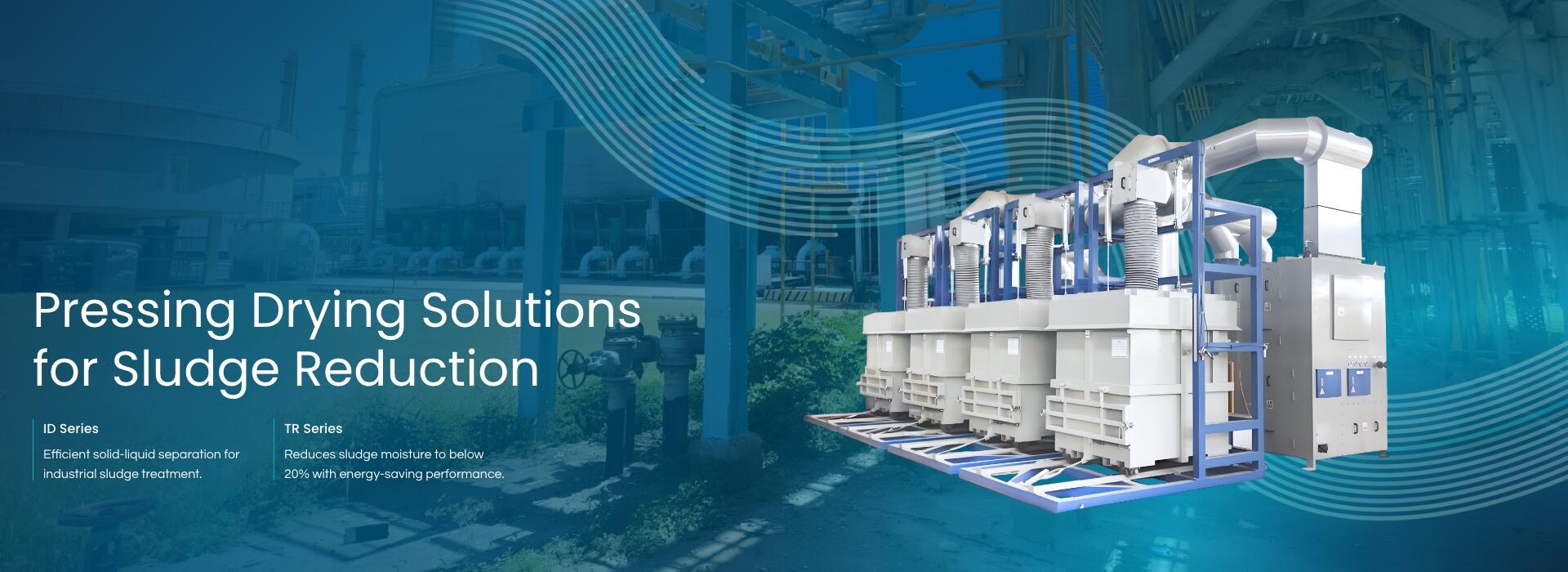
Within FU CHAN MACHINERY’s drying and concentration equipment range, the TR Series belongs to the heat pump sludge dryer category. Among them, the CD Cabinet Drying System is suitable for batch drying and more flexible operating arrangements. After upstream sludge has already been dewatered into cake form, the CD system can serve as a downstream drying unit to further reduce moisture content and complete the sludge reduction process.
For applications that require batch-based operation, flexible layout planning, or clearer separation between dewatering and drying stages, a cabinet drying system is often easier to introduce and manage. This is one of the common practical application directions of heat pump sludge drying technology.
TR Series Operation Video
When is heat pump sludge drying worth evaluating?
When a site already has upstream dewatering equipment but still needs further moisture reduction, lower hauling weight, smaller storage volume, or improved downstream handling convenience, heat pump sludge drying often becomes a practical downstream option. This is especially true when the treatment objective is not only dewatering, but broader sludge reduction and improved handling efficiency.
Looking at heat pump sludge drying from a system planning perspective
Planning sludge reduction equipment usually requires looking beyond a single machine. Upstream dewatering conditions, sludge characteristics, target moisture content, daily treatment volume, site layout, and downstream handling requirements all affect whether downstream drying is suitable. The value of heat pump sludge drying lies in the fact that it is not just a final-stage machine, but a technical unit that can be integrated into a complete sludge reduction system.
If you are evaluating heat pump sludge drying equipment, contact FU CHAN MACHINERY. We can help plan a more suitable TR Series application based on upstream dewatering conditions, sludge characteristics, and reduction targets.